
Instagram knows you. Not you, you. But the primal instinct you. It understands how your neural receptors respond to stimuli, especially the kind that release a rush of that feel-good, intense satisfaction. Only if our loved ones were as competent as these algorithms, they’d know what to feed us at what time.
I find myself uniquely positioned to comment on the subject of social media engagement. I’ve been someone who has indulged in pointless scrolling. I’ve also been someone who has left the platform for 6 months at a go without a second thought. So clearly, this establishes me as an authority on the subject - I have escaped the prison and willingly returned to it, time and again. But what remains true is that it has us in this chokehold, and not the sexy kind.
As everything becomes one big goop of content served like mashed potatoes on a plate, let’s evaluate how we got here. There might be an insight to the exit somewhere in this story.
Instagram was created to post photo and location check-ins as Burbn, FaceMash (now Facebook) to rate women. Both equally questionable uses of technology. Yet what ended up as the winner was the neuro-hacking that they realised their interface provided. We wanted to share photos, and also rate (re: like) them. We wanted to “friend” people we didn’t really know or have the courage to talk to. Our interest in visual mediums was just on the rise thanks to televisions and personal computers. But where did these applications like Instagram become ubiquitous enough to influence behaviour, brains and the meaning of life.
I imagine it happened when fundamentally things worked - we liked seeing the photos our friends posted on IG, professional updates of our circle on LinkedIn, or streaks of daily happenings on Snapchat, our behaviours paved the path to a constant lab mice-fication of us. The tech bros wondered what else might these mice respond to, what if we showed them suggested content as well - their favourite brands, businesses or people. And so it progressed. We see no one we know anymore but a number of people inconsequential to our lives.
We’ve watched it all. A person power-cleaning their driveway, people getting ready to go to their job (GRWM), a couple fake proposing (or real, who knows any more), a cat doing things, a litter of puppies, disaster videos. We will watch anything. The instant dopamine hit keeps us coming back.
As Meta, then Facebook, was listed on the stock market, and the debt collectors of this free service for years turned up to collect their dues, we’ve been bombarded with advertisements, feeds full of suggested content that keeps us glued, and now AI slop. Our attention is the currency with which we transact. And like any currency it is finite, where we spend it either keeps us mentally wealthier or without savings. Hope the analogy lands.
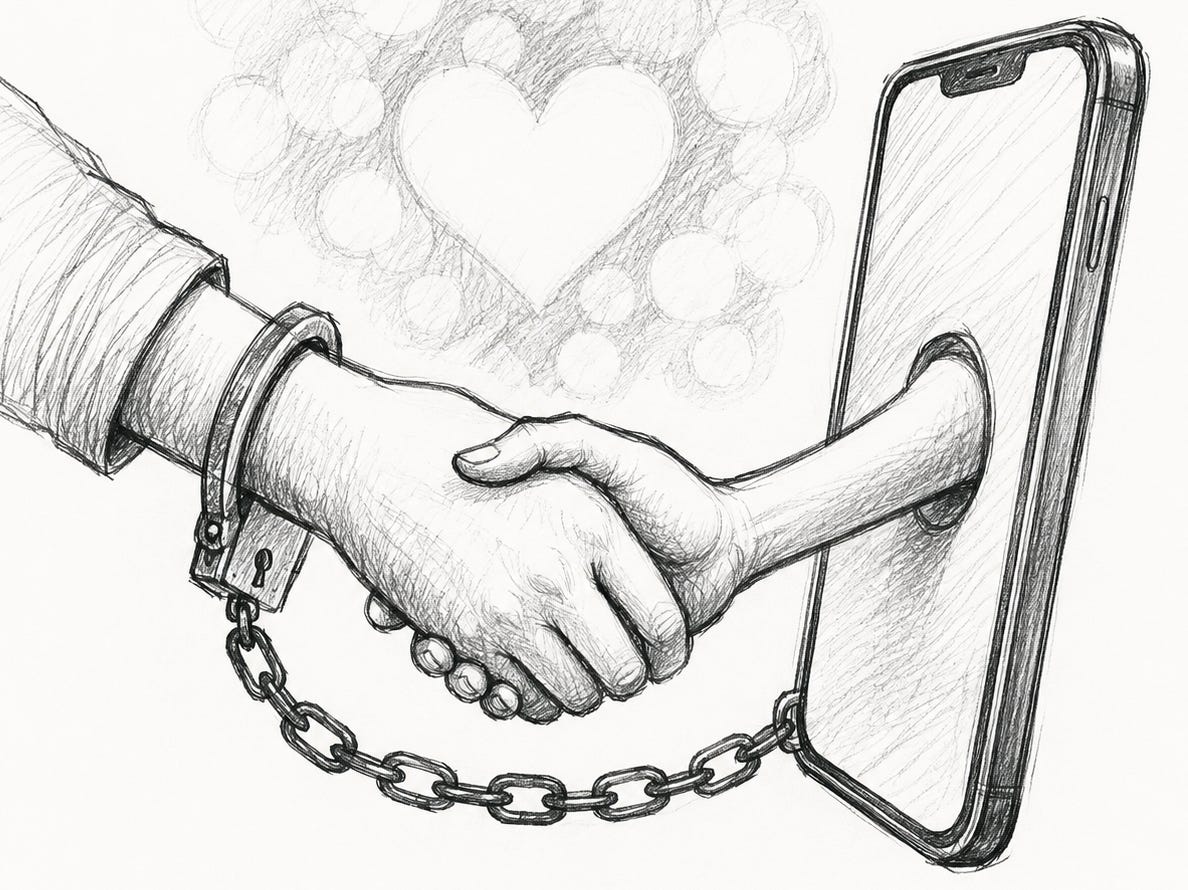
I’ve met a few people who believe that regulating social media usage is the correct way to use it. I’m tempted to disagree with them, but I recognise that these might be people who exhibit a fair amount of impulse control across their lives. The impact of this overexposure to content in my observation, has degraded the quality of our lives significantly.
It’s like the smoker with taste buds that have been numbed, unable to enjoy the nuance of flavours in a particular dish.
Beyond the initial benefits of connection and discovery, we seem to be at the tail end of the social media age (from the perspective of our well-being). More on this later.
Our continued participation is now not a default opt-in to trending technology but an intentional exchange of our mental/emotional currency. Our cognisance should allow us to re-evaluate whether we need it in our lives, or maybe our taste buds should experience the nuance of flavour.